About
Bio
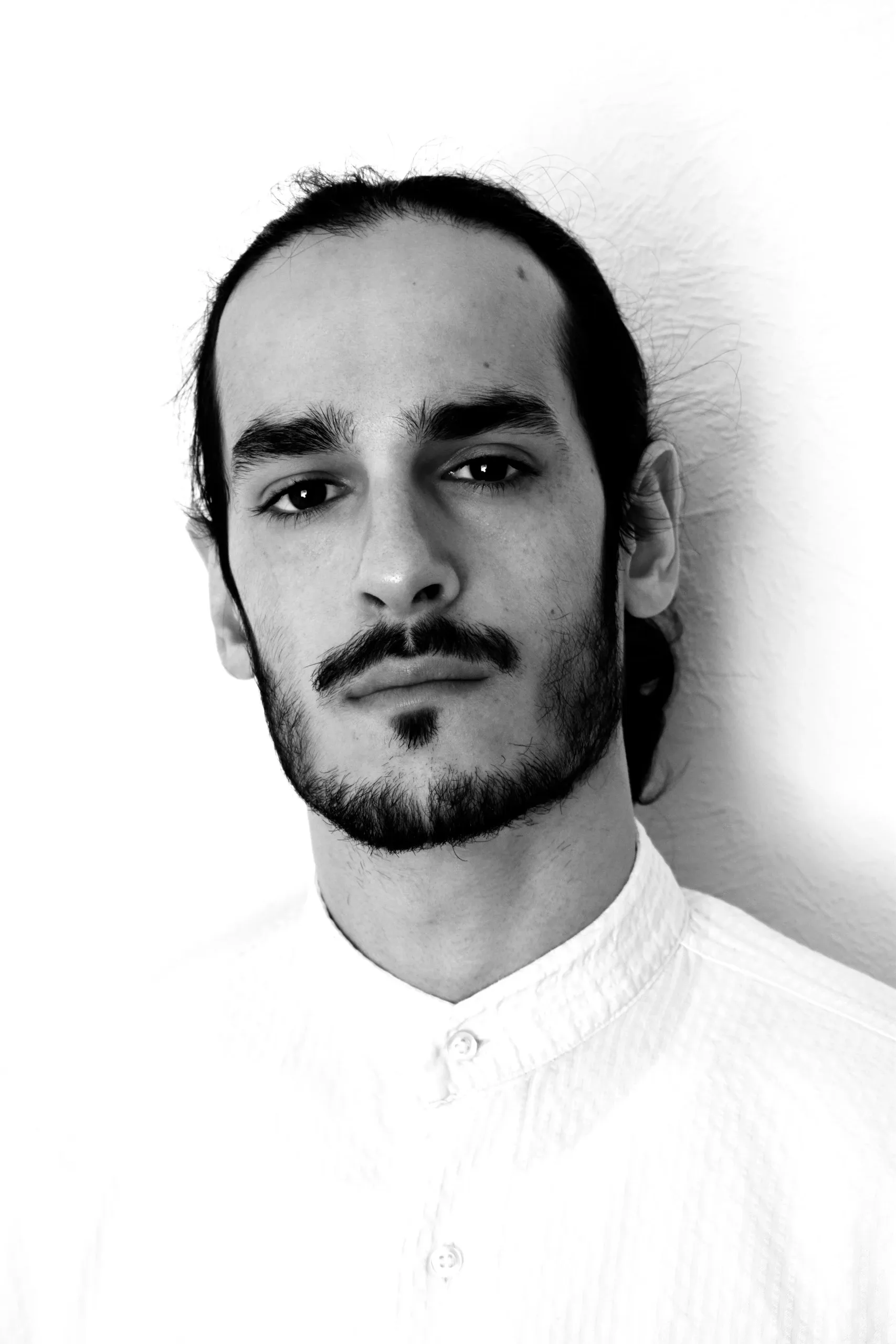
Roberto Tedesco, born in 1992, began studying dance at the age of eleven in Calabria. In 2009, he joined the Scuola del Balletto di Toscana, immediately performing with its junior company, Junior Bdt, in productions by Mauro Bigonzetti, Fabrizio Monteverde, Francesco Nappa, Eugenio Scigliano, Cristina Rizzo, Michele Merola, Alessandro Bigonzetti and Arianna Benedetti.
After a brief period at the Maggio Musicale Fiorentino, where he performed a choreography by Andonis Foniadakis, in 2011 he joined Aterballetto, where he would dance for ten years. During this period, he had the opportunity to work with some of the most prominent choreographers on the Italian and international scene, including Ohad Naharin, Jiří Kylián, Hofesh Shechter, William Forsythe, Johan Inger, Mauro Bigonzetti, Michele Di Stefano, Andonis Foniadakis, Rihoko Sato, Diego Tortelli, Jiří Pokorný, Giuseppe Spota, Philippe Kratz, Francesco Nappa, Eugenio Scigliano and Cristina Rizzo.
It was during his years at Aterballetto that he began to develop a more conscious interest in choreographic creation, presenting his own work as a choreographer for the company’s Giovani Coreografi evenings. During those same years, he was selected twice for the International Choreographic Competition di Hannover, where he received the Premio della Critica. For Aterballetto, he created Cemento for the In/Finito project and Turn the Tide for the MicroDanze project.
In July 2021, after completing his final season as a dancer with the company, he decided to devote himself more fully to choreographic research and embarked on a path as a freelance artist. The transition from his experience as a performer to that of a choreographer thus became a central element of his research, which developed through the creation of works for companies, young dancers, and production and training projects, engaging with different contexts and artistic communities.
He was selected for Vetrina Giovane Danza D’Autore with the duet Punch 24. The same work was subsequently rearranged for six dancers of MM Contemporary Dance Company under the title Round Trip.
In Germany, he staged the duet Line-up at the Nationaltheater Mannheim, created By the Throat for Ballett Vorpommern, and was selected for the Think Big project at the Staatsoper Hannover, where he created Superorganismo, a work for eight dancers.
He was selected for Residance XL, an initiative of the Anticorpi network, through which, following a series of residencies at Oriente Occidente, Claps and Santarcangelo dei Teatri, he began developing Decisione Consapevole. With this project, he was among the finalists of DNA – Appunti Coreografici 2022 and, in 2023, took part in the Open Studios at NID in Cagliari.
Through SupportER, an initiative of the Anticorpi Emilia-Romagna network, and following a series of residencies at Scenario Pubblico, Teatro Comunale di Ferrara and Teatro Comunale di Vicenza, he created the duet Simbiosi. With this work, he was selected for Vetrina Giovane Danza D’Autore for the second time and was among the four finalists of the Premio Prospettiva Danza Teatro, where he received a special mention.
Teatro Comunale di Vicenza appointed Roberto as an Artista in Rete, supporting him for the 2023 edition of Festival Danza In Rete.
He created Standpoints for the new production Callas Callas Callas by Compagnia Opus Ballet.
In Reggio Emilia, the city where he lives and with which he maintains a strong artistic and professional connection, he choreographed Ad Eva and Memory Lab for XL Dance Company, presented at Fonderia Aterballetto, as well as Àmor, an urban performance conceived as part of Fotografia Europea – Circuito Off.
In January 2024, he received the Premio Danza&Danza as Coreografo Emergente dell’anno 2023.
Centro Coreografico Nazionale Aterballetto commissioned him for several projects, including workshops for graduating students in acting, dramaturgy and directing at the Università di Palermo, in collaboration with Teatro Biondo; the creation of Bolero for students of the Liceo Coreutico Matilde di Canossa in Reggio Emilia; teaching on the advanced training programme based at Fonderia Aterballetto, in collaboration with Regione Emilia-Romagna; and the curation of dance interventions for one of the evenings of the Visioni del Corpo project, for which he created Small Me and Soft Target.
University lecturer and dance critic Stefano Tomassini invited him to lead a workshop for students at IUAV dell’Università di Venezia.
Centro Nazionale di Produzione della Danza Körper decided to produce Decisione Consapevole, a work for four dancers. The project was subsequently supported by CCN Aterballetto as co-producer and by Artisti Associati, which invited Roberto for a residency at Teatro Comunale di Cormons. Decisione Consapevole, previewed at Fonderia Aterballetto, was subsequently selected for the sezione programmazione of NID Platform di Vicenza, where it was presented to industry professionals at Teatro Astra.
In September 2024, he received the Premio Internazionale per la Danza “Città di Foligno” as Coreografo Rivelazione 2024.
From the first months of 2025, he began working on a new choreography produced by KLM - Kinkaleri/Le Supplici/mk entitled We Are Our Roots, a solo for a female dancer accompanied live by a handpan musician. The work premiered at Artfest Festival, co-producer of the production.
In 2025, with the project LOS(v)ERS for MM Contemporary Dance Company, of which he is an associate artist for the 2025–2027 period, he was among the winners of the Per Chi Crea call by SIAE.
Centro Coreografico Nazionale Aterballetto entrusted him with the Italia Danza 2025 – An Italian-Ethiopian Dance Dialogue project, promoted by the Direzione Generale per la Diplomazia Pubblica e Culturale della Farnesina and performed by CCN/Aterballetto. Through Roberto’s work at the Istituto Italiano di Cultura di Addis Abeba, the project gave rise to a site-specific performance bringing the cultures of the two countries into dialogue, created by Italian choreographer Roberto Tedesco and Ethiopian choreographer Melaku Belay, director of the Fendika Cultural Center.
Centro Coreografico Nazionale Aterballetto and Fondazione Ravenna Manifestazioni also involved him as a dancer in the project Impromptus. Arie, danze e improvvisazioni, a process aimed at creating a creative space in which dancers and musicians work side by side, giving form to works born from improvisation and mutual inspiration.
He created Rebecca, a solo for a female dancer commissioned and produced by Festival Nutida, and Omologa Azione for the Pulse Program of Opus Ballet, a professional contemporary dance programme based in Florence.
With MM Contemporary Dance Company, he premiered LOS(v)ERS at Teatro Ariosto in Reggio Emilia as part of Festival Aperto.
For Compagnia Opus Ballet, he created the duet Piano-Forte, which premiered at Fonderia Aterballetto and was subsequently selected for the sezione programmazione of NID Platform 2026.
He also created L’Arroganza, a work featuring 33 young dancers from the Agora Coaching Project advanced training programme, directed by Michele Merola and Enrico Morelli, and Che non ritorna, a work for 13 young dancers from the Vista17 Dance Training Creation advanced training programme at La Capriola in Modena.
In 2026, he created Triple Trip for Spellbound Contemporary Ballet.
Research
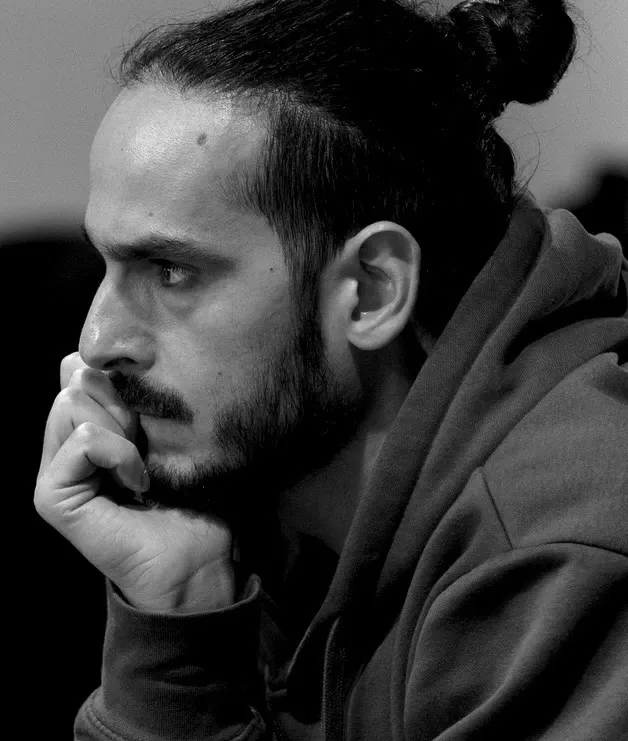
Roberto Tedesco’s path as a choreographer stems from the desire to build, project by project, a distinctive language and a recognisable authorial vision. His long career as a performer constitutes a wealth of experience from which, at the same time, emerges the need to create distance, in order to question what the body has assimilated and to search for a more authentic and personal nature of movement. Improvisation and the way of living music, rather than simply hearing it, become tools through which the body is given the possibility to explore, in an attempt to move away from what memory spontaneously tends to reproduce and to allow a vocabulary that truly belongs to it to emerge.
This research into movement is accompanied by particular attention to the way bodies inhabit and transform a place. Composition and the precise organisation of bodies, distances and trajectories are central elements of the creative process. The performance space, whether within a theatrical setting or in environments of a different nature, is not simply a container for dance, but a material with which the creation enters into a relationship. Through movement, Tedesco seeks to enhance it, alter its perception and almost improve it, constructing precise relationships between the bodies and their surroundings.
Each project follows a different path and arises from different premises and themes, opening up a new direction of research each time. What remains constant is the method through which Tedesco researches movement together with the performers, through a process that gradually leads from free exploration to the definition of the choreographic score. To date, his creations have explored themes related to relationships, psychology, childhood and adolescence, social issues, origins and emotions, drawing on his own experience and personal journey.
Although starting from different stimuli and subject matter, Tedesco deliberately avoids descriptive or narrative dance, leaving the audience the possibility of constructing their own interpretation of the work. The intention is not to direct the audience towards a single meaning, but to open up a space of possibilities in which each person can relate to what they see through their own sensitivity, experience and imagination.
In his work with performers, individual freedom and creativity constitute a starting point, before being progressively brought within a shared vocabulary. Tedesco begins with the dancers’ individual nature, seeking to enhance their characteristics, and then brings the different proposals closer to a precise aesthetic sensibility. The aim is to preserve individual creativity without sacrificing the homogeneity of the whole, so that different bodies can belong to the same aesthetic and contribute to the construction of a recognisable choreographic identity, without the work becoming a juxtaposition of languages that are distant from one another.
An important part of his research takes shape in the relationship between freedom and rules, instinct and rigour, individuality and homogeneity. Through his work on bodies, movement and the relationship with space, Tedesco engages each time with different performers and contexts, adapting his process to the specific qualities of the dancers and the places they inhabit. It is precisely in the ability to move through this variety without losing a personal direction that, over time, the sought-after recognisability of his artistic perspective develops.
The relationship with the audience is a central element of his research. Tedesco does not necessarily seek a specific reaction, nor does he aim to determine a particular emotion or a single meaning. What he wants is to generate a reaction, whatever it may be: positive or negative, emotional or rational, immediate or one that settles over time. What matters is not to remain indifferent; to return home after seeing one of his works feeling that the experience has caused something, however small, almost imperceptible.